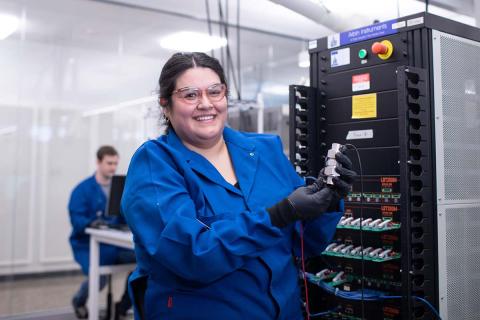
Graduate students have the option to be employed as a Graduate Research Assistant (GRA). Graduate research assistants are students who, during their academic training, are employed in part-time or temporary research positions, where the student's academic training is based in part on the research performed or where the research duties being performed will assist the student in fulfilling his or her degree requirements. All duties of GRAs are to be carried out under the supervision and direction of faculty or administration.
Employment Conditions and Eligibility
Conditions for Student Employment
The Graduate School maintains a website with conditions of employment that should be provided to students and appointing staff.
Graduate programs may also stipulate additional eligibility requirements for students serving as GRAs, such as a degree in a particular field or pre-requisite coursework.
Examples of these requirements are as follows:
- Good academic standing at the time of application and during the semester employed
- Proficiency in specific skills as identified by the supervisor (e.g., software proficiency or laboratory skills)
- Consent of faculty report/thesis/dissertation supervisor (if not the GRA supervisor)
- Safety training for GRAs working in research laboratories.
Job Description
The Handbook of Operating Procedures provides the general job description for graduate and undergraduate research assistants (HOP 9-2030).
A Graduate Research Assistant (GRA) is a graduate student who is employed by a university to support research activities that are typically related to their academic program and/or a faculty member’s research projects.
Duties of Graduate Research Assistants
- Contribute, under supervision, to a program of departmental or interdepartmental research. The appointment is made with the understanding that the required services will contribute to the professional training of the student. GRAs are committed to performing assigned services, their work is usually suitable for and may be used as part of their report, thesis, or dissertation research to the extent approved by the faculty supervisor.
- Engage in research as assistants to members of the faculty or administration of the University. Appointment to one of these positions is usually made only in the student’s own department or in another unit of the University where the research to be undertaken is related to the student’s field of study. Appropriate service for an advanced research assistant may include the carrying out of independent research under the guidance of a faculty member.
- GRAs are prohibited from performing personal tasks for the instructor. Instructor and GRA should agree with methods for communicating during the semester, frequency of meetings, and guidance and feedback.
Time Management
GRAs are typically appointed for 5–20 hours per week. Because GRAs do not submit timesheets, there is no formal method for tracking actual hours worked. For this reason, expectations for time commitment and workload should be clearly established before the semester begins, with both the GRA and the supervisor in agreement.
Research performed by a GRA may also count toward degree requirements—such as research credit hours, a thesis, or a dissertation—the total time a student spends on research may extend beyond the assigned weekly employment hours. In such cases, the scheduled weekly employment hours should be understood as the minimum expected amount of research work per week. It is important for the GRA and supervisor to come to an agreement on expectations regarding time spent on research. This can be done by setting expectations for completion of tasks rather than tracking weekly hours.
GRAs do not accrue vacation or sick leave. Therefore, the GRA-supervisor agreement should clearly outline expectations for both planned and unplanned absences. The agreement should also address expectations for work during exam periods and academic breaks (excluding official university holidays), in accordance with school, college, or departmental policies.
Performance Expectations
While the job description sets the duties to be performed by a GRA, the GRA-supervisor agreement should also address performance standards for those duties.
Examples of performance expectations include:
- Follow instructions, meet deadlines and complete designated work.
- Cooperate with supervisors and treat students and co-workers respectfully.
- Be punctual (report to class, lab, discussion sections and meetings on time).
- Return student work in a timely fashion.
- Provide prior notification and alternate plans before absences, delays or inability to meet duties.
- Meet a reasonable, objective measure of efficiency and productivity.
- Follow accepted safety practices.
- Follow protocols and other established procedures.
Performance Assessments
GRAs should be given feedback on their performance by the research supervisor on a regular basis. Graduate programs should specify a frequency of performance evaluation. Mid-semester feedback is advisable in order to identify performance concerns early and provide opportunities for improvement. When problems are identified, performance improvement plans should be developed and agreed upon by the GRA and the supervisor. The frequency and form of performance assessments should be specified in the GRA-supervisor agreement.
There are several methods that can be used by the supervisor to report GRA assessments to the department or program, including submission of a letter, Qualtrics survey or Docusign survey. The results of the assessment should be communicated to the GRA within a specified timeline outlined in the agreement. When appropriate and relevant, the assessment can be used as a means to recommend GRAs for reward and advancement opportunities.
Grievance and Dispute Resolution Processes
GRAs should be informed of dispute resolution and grievance processes when problems arise. The Graduate School provides a summary of grievance procedures for graduate students. Some schools, colleges, departments, and programs have additional grievance procedures and guidance for dispute resolution. These policies and procedures should be made clear to the GRA and the supervisor through the GRA-supervisor agreements.
If the GRA’s grievance is specifically related to employment, the procedure is outlined in the HOP 9-2030.
Student Employment Separations
Human Resources provides guidelines for student employment separations when performance problems cannot be resolved. Information on grounds for dismissal should be included in GRA-supervisor agreements so that both parties are aware of the policies and procedures.
Hiring Resources
Many graduate students serving as GRAs received a commitment of employment through a letter of financial support when they were admitted to the graduate program. These letters generally establish the eligibility and conditions of employment for these students.
Work Agreements
In many cases, the Graduate Research Assistant (GRA) supervisor also serves as the student’s mentor and/or report/thesis/dissertation supervisor, but these roles may be assumed by different people. This website serves as a resource for developing employment agreements for GRAs and supervisors, outside of the mentoring and academic supervision roles. (If you are interested in learning more about best practices in graduate student mentoring, please refer to the guides and documents prepared by the Graduate Student Mentoring Committee).
When creating GRA-supervisor agreements there are several topics that both the student and the supervising faculty member should be made aware of, discuss, and/or agree upon.
While some of the employment onboarding may be managed by a graduate coordinator, program administrator or department business officer, the supervising faculty member should still be aware of university rules surrounding student eligibility and conditions of employment. The details of the job description, time management, performance expectations and assessments, and grievance processes should be discussed and agreed upon by the student and supervisor. Signatures from both parties should be obtained and retained by the department or graduate program. Programs should specify how frequently an agreement should be reviewed and revised by the supervisor and GRA for appointments that continue beyond one semester.